Saving Money
How Sukanya Samriddhi Yojana (SSY) Works in India
Sukanya Samriddhi Yojana (SSY) in India explained: eligibility, deposits, tenure, withdrawals, and tax framing—educational, not a product tip.
· 4 min read
Featured explainer
By FinanceBlogg Editorial Team · · 14 min read
Looking for something specific?
Search our explainers or filter by topic.
Sukanya Samriddhi Yojana (SSY) in India explained: eligibility, deposits, tenure, withdrawals, and tax framing—educational, not a product tip.
· 4 min read
Build a household cash-flow system in India: track inflows and outflows, set buffers for EMIs and festivals, and review monthly—educational only.
· 4 min read
How households can read an RBI repo rate decision: what repo means, what changes for EMIs and deposits, and what to verify beyond the headline.
· 4 min read
Secured vs unsecured loans in India: how collateral changes lender risk, typical product examples, and questions to ask—educational, no product tips.
· 4 min read
BSBDA in India explained: what a Basic Savings Bank Deposit Account is, typical facilities, how it differs from regular savings, and what to verify.
· 4 min read
Advance tax in India explained: when it applies, how instalments work at a high level, and who should check liability—educational, not filing advice.
· 4 min read
Budgeting, goal planning and everyday money habits explained for Indian households.
Learn how to run a quarterly personal finance review in India: cash flow, emergency fund, EMIs, goals and paperwork—educational steps, not product tips.
· 4 min read
Learn how to calculate and track net worth in India: assets, liabilities, a simple worksheet method, and common mistakes beginners make.
· 3 min read
Learn how to prioritise multiple financial goals on one salary in India with a practical savings framework, examples and simple steps.
· 9 min read
How savings accounts, deposits, statements and digital payments work, and how to use them safely.
Account Aggregator in India explained: RBI-regulated consent-based data sharing, what FIP/FIU mean, and safety checks before you approve access.
· 4 min read
Compare NEFT, RTGS, IMPS and UPI in India: when each is used, how they differ on speed and purpose, and practical tips for safer transfers.
· 3 min read
Understand the difference between a bank account lien, freeze and debit freeze in India. Learn why banks restrict accounts, how to check the reason.
· 10 min read
Credit scores, interest rates, EMIs and borrowing decisions, explained without jargon.
Floating vs fixed rate loans in India explained: how EMIs and tenure can change, reset clauses to read, and questions to ask—without product tips.
· 4 min read
Learn how to check and dispute errors on your credit report in India, including wrong accounts, settled dues and RBI-linked free report rights.
· 3 min read
Understand the difference between co-applicant, co-borrower and guarantor in India. Learn their responsibilities, loan liability and credit score impact.
· 9 min read
Emergency funds, spending habits and practical ways to build savings steadily.
Senior Citizens Savings Scheme (SCSS) in India explained: eligibility basics, deposit idea, interest payouts, and what to verify on official small-savings rules.
· 4 min read
Understand sweep-in (auto-sweep) facilities in India: how excess savings can move into deposits, liquidity, interest and questions to ask your bank.
· 3 min read
Learn what sinking funds are and how to save for school fees, insurance, festivals and annual expenses in India with a simple monthly plan
· 9 min read
Foundational concepts such as risk, return, inflation and diversification, for learning rather than tips.
Risk tolerance for beginner investors explained: capacity vs comfort, time horizon, and how it links to asset allocation—educational only.
· 3 min read
Compounding in investing explained for beginners in India: how growth can build on itself, illustrative maths, limits, and myths—without return promises.
· 3 min read
Rupee cost averaging explained for beginners in India: how regular investments interact with market prices, with clear limits and no return promises.
· 2 min read
How mutual funds, SIPs, NAVs and expense ratios work, with the risks explained alongside the benefits.
NAV in mutual funds India explained: what Net Asset Value means, how it is used in units, and why a low NAV is not a discount—educational only.
· 4 min read
Index funds in India explained: how they track benchmarks, TER and tracking difference basics, and what beginners should verify—educational only.
· 3 min read
Learn what a mutual fund expense ratio (TER) is in India, how it affects investors, where to read it, and common myths—without product tips.
· 2 min read
Understanding health, life and general insurance terms so you can read a policy with confidence.
Sum insured in health insurance India explained: what the cover cap means, how claims relate to it, and what to check on your policy—educational only.
· 3 min read
No-Claim Bonus (NCB) in Indian health insurance explained: how claim-free years can raise cover or discounts, limits, and what to check in policy wording.
· 3 min read
Understand deductible, co-pay and co-insurance in Indian health insurance: what you pay, what the insurer pays, and what to check in the policy wording.
· 3 min read
Income tax and GST basics for individuals. Rules change every year, so always confirm with official sources.
Old vs new tax regime in India: how to compare using income, deductions and exemptions, what changes yearly, and where to verify official slabs.
· 4 min read
TDS explained for individuals in India: how tax deducted at source works, where to verify it, and how credit generally appears when filing returns.
· 2 min read
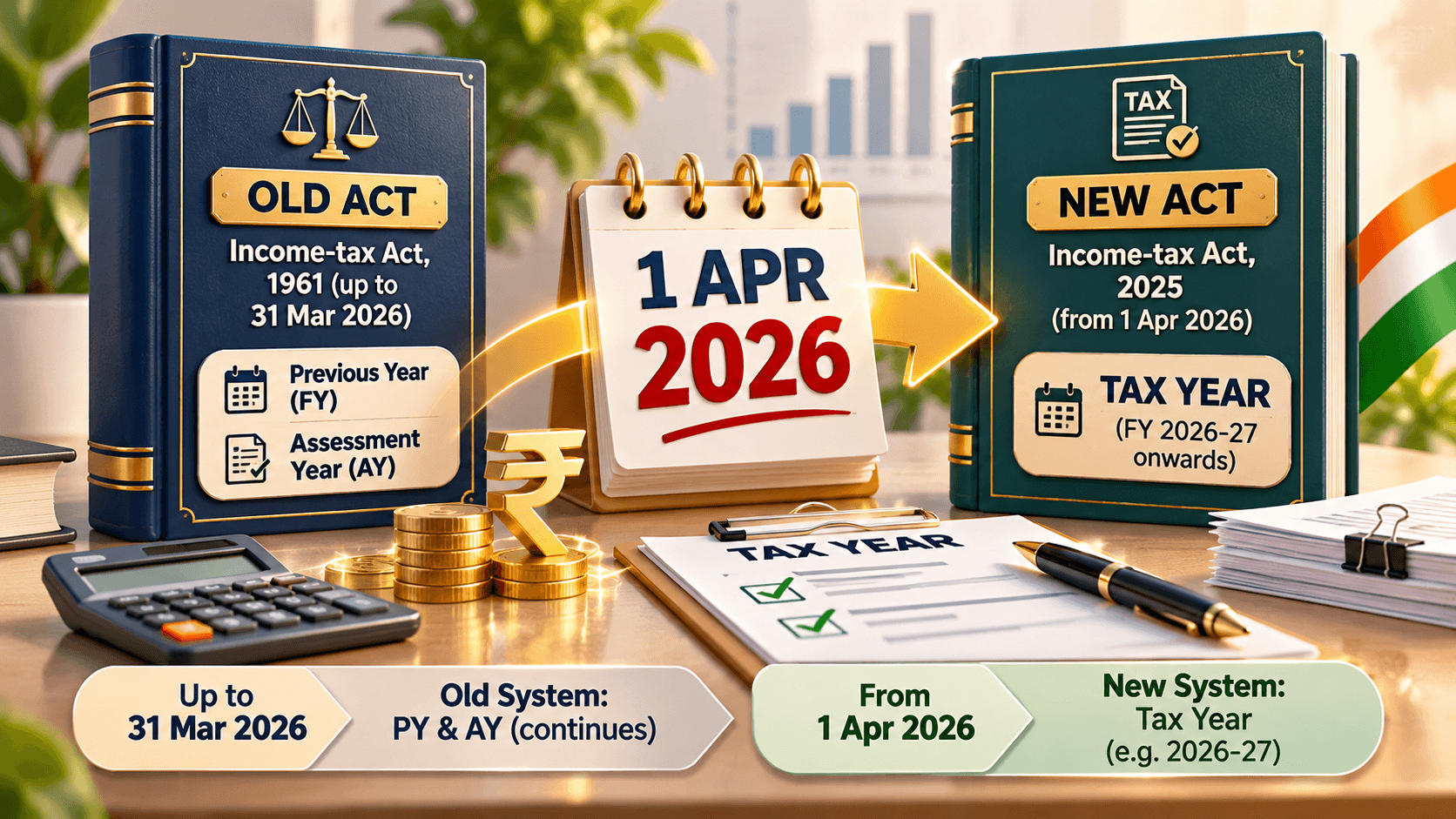
Understand Tax Year vs Assessment Year in India after the Income-tax Act 2025. Learn FY 2025-26, AY 2026-27, Tax Year 2026-27 and the new rules.
· 12 min read
Explainers on regulatory changes and announcements, linked to the official source wherever possible.
How to read IRDAI health insurance circulars in India: official sources, what may change for buyers and policyholders, and how to ignore rumour forwards.
· 3 min read
How to read EPFO interest rate announcements and PF rule updates in India—official sources, what changes in your PF passbook, and what headlines often overstate.
· 4 min read
How to read RBI circulars on UPI and digital payments: official sources, what changes for users, effective dates, and how to spot fake limit forwards.
· 4 min read
We write educational explainers, not tips or personalised advice. Articles link to official sources such as the RBI, SEBI, IRDAI and the Income Tax Department, and we correct errors openly when we find them.