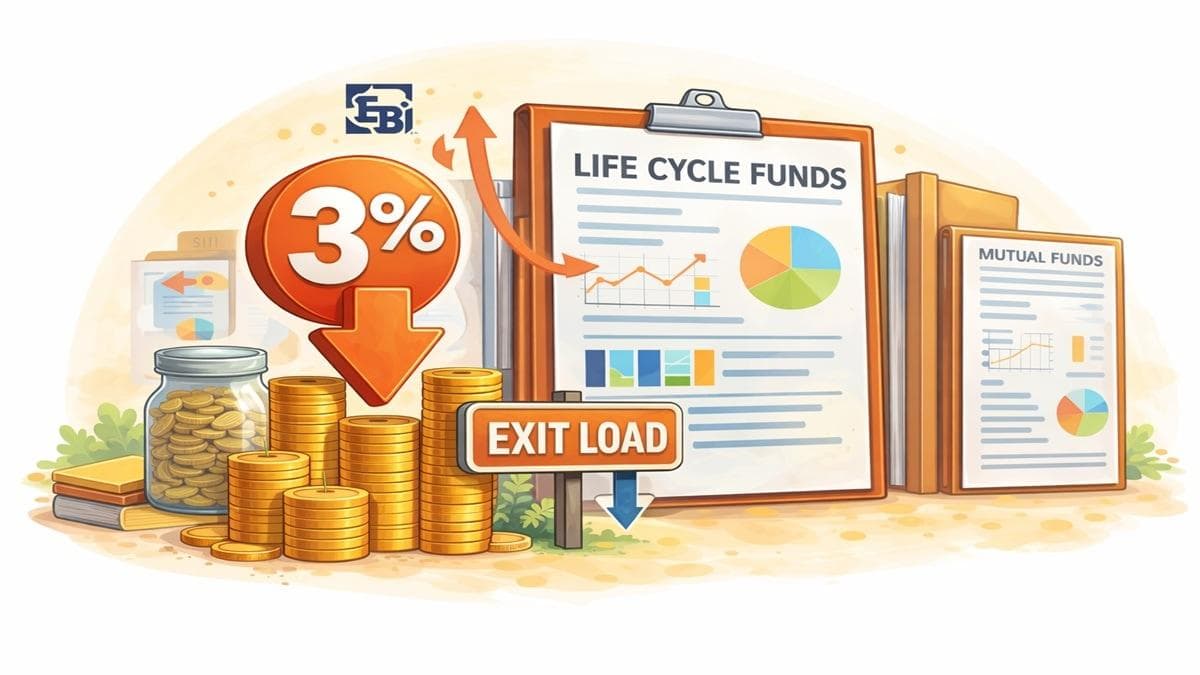
Mutual Funds
What Is Exit Load in Mutual Funds in India?
Exit load in Indian mutual funds explained: when it applies on redemption, how to read scheme documents, and how it differs from expense ratio and tax.
· 4 min read
Loading search…
Exit load in Indian mutual funds explained: when it applies on redemption, how to read scheme documents, and how it differs from expense ratio and tax.
· 4 min read
Understand mutual fund exit load, lock-in periods and redemption in India. Learn withdrawal rules, charges, ELSS restrictions and practical examples.
· 9 min read
Learn how to choose a mutual fund in India by comparing goals, risk, costs, benchmarks, portfolio overlap and exit loads before investing.
· 7 min read
How to read a mutual fund factsheet in India: NAV, TER, portfolio, riskometer, exit load and what the numbers do not tell you.
· 5 min read
Portfolio rebalancing explained for beginners in India: how asset mix drifts, calendar vs threshold methods, taxes, costs and common mistakes.
· 4 min read
Learn how a Systematic Withdrawal Plan (SWP) works in India, how mutual fund units are redeemed, its benefits, risks, taxation and how to start one.
· 11 min read
Learn how to evaluate an investment in India with 7 essential checks covering risk, returns, fees, liquidity, diversification and fraud prevention
· 8 min read
Learn what index mutual funds are, how they track market indices, their costs and risks, and what Indian investors should check before investing.
· 4 min read
NAV in mutual funds India explained: what Net Asset Value means, how it is used in units, and why a low NAV is not a discount—educational only.
· 4 min read
Index funds in India explained: how they track benchmarks, TER and tracking difference basics, and what beginners should verify—educational only.
· 3 min read
Compounding in investing explained for beginners in India: how growth can build on itself, illustrative maths, limits, and myths—without return promises.
· 3 min read
How retail investors can read SEBI mutual fund circulars: where to find them, what usually changes for investors, and how to ignore rumour-driven tips.
· 4 min read
Learn what a mutual fund expense ratio (TER) is in India, how it affects investors, where to read it, and common myths—without product tips.
· 2 min read
How direct and regular mutual fund plans differ, why expense ratios compound, how to check which plan you hold, and what a regular plan’s commission pays for.
· 6 min read
What asset allocation means for beginners in India, how it differs from diversification, and how time horizon shapes the mix.
· 5 min read
A beginner's guide to mutual funds and SIPs in India: NAV, fund categories, direct vs regular plans, costs, risks, rupee cost averaging and tax.
· 8 min read